
Insights Library
Loss on sale and planning compensation: significant changes to Part 5 of the Planning and Environment Act


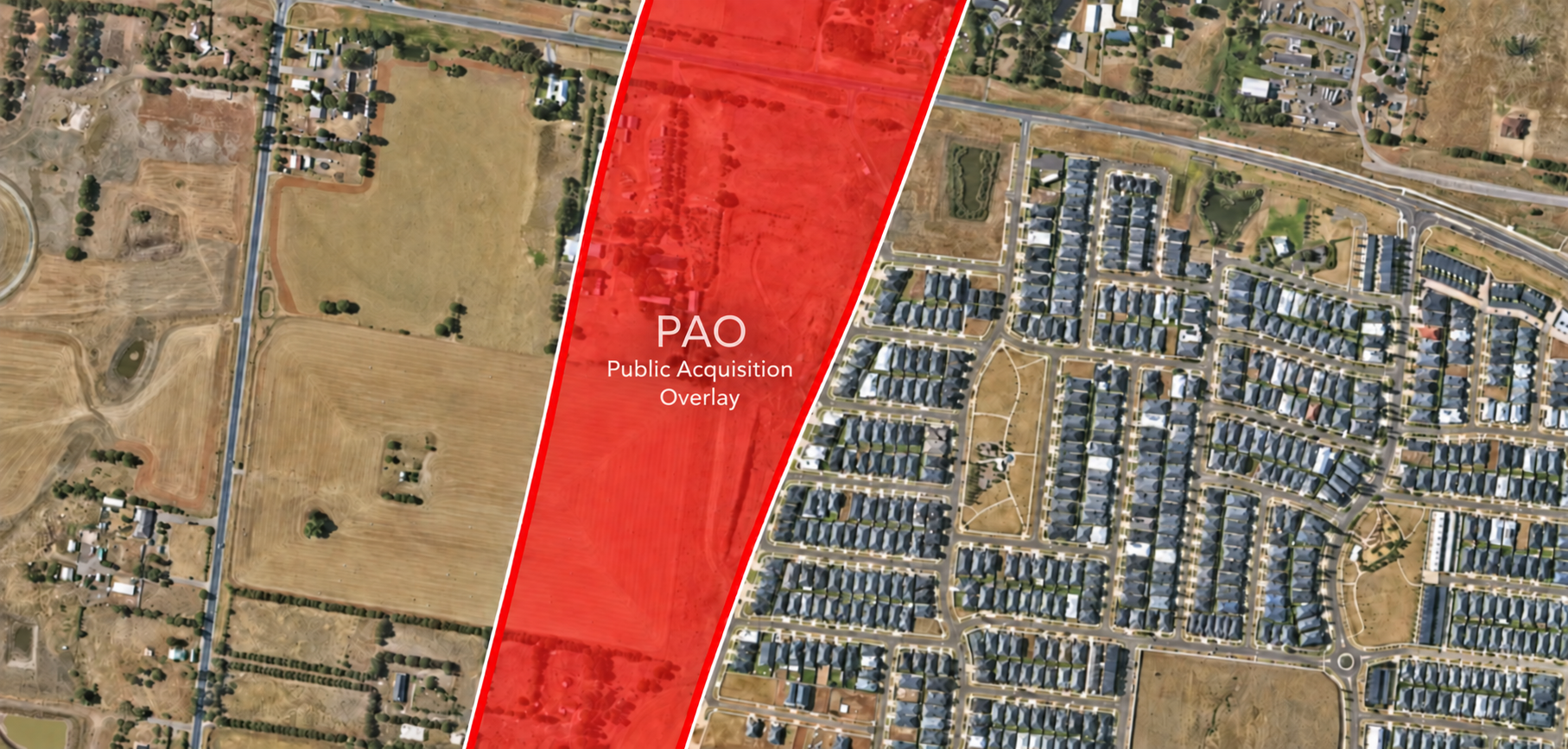
Changes to Victoria’s planning compensation regime will affect loss-on-sale claims, professional expenses, residential compensation, valuation methodology and who may claim. For landowners and developers, the timing of transactions and compensation claims will become increasingly important. This article provides an update following the passing of the Planning Amendment (Better Decisions Made Faster) Act 2026 by Victorian Parliament to change the loss on sale regime for compensation arising from a public acquisition overlay or other public reservation of land.
Part 5 of the Planning and Environment Act 1987 (Vic) (PE Act) provides a relatively narrow but important right to compensation where land is affected by reservation for a public purpose. For landowners and developers, the most familiar example is a “loss on sale” claim under section 106, where land affected by a Public Acquisition Overlay or other qualifying reservation is sold for less than it might reasonably have achieved absent the reservation.
That compensation regime is undergoing significant reform. The Planning Amendment (Better Decisions Made Faster) Act 2026 (2026 Act), together with amendments introduced in 2025, changes not only the procedure for pursuing Part 5 compensation, but also the recoverability of professional expenses, the treatment of a claimant’s principal place of residence, the valuation exercise, the evidentiary burden, who may claim and entitlement to interest on compensation.
In the second reading speech, the Government described the compensation amendments as changes intended to improve clarity and process, while also reducing the costs of managing claims and the State’s future financial liabilities. For claimants, however, several of the amendments have substantive consequences.
The reforms are being introduced in stages
It is important to distinguish between the amendments that are already in force and the more substantial Part 5 reforms that are yet to commence.
On 25 November 2025, amendments made by the Consumer and Planning Legislation Amendment (Housing Statement Reform) Act 2025 introduced section 99A, which requires Part 5 claims to be made in the prescribed form and accompanied by supporting evidence specified by Ministerial order. The same reforms introduced sections 104B and 104C dealing with interest on compensation.
A further change commenced on 3 June 2026. Section 104B now allows VCAT or the Supreme Court, if good cause is shown (including delay caused or contributed to by a claimant), to reduce the rate of interest or pause the accrual of interest for a specified period.
Most of the more substantial amendments to Part 5 remain to commence by proclamation, with a default commencement date of 29 October 2027. Supporting regulations are also important because parts of the new regime, including prescribed time periods and possible exceptions to claimant eligibility rules, are left to regulation.
Loss on sale: settlement is expressly made the critical event
Section 106 of the PE Act allows an owner to claim compensation where land is sold at a lower price than the owner might reasonably have expected to obtain if the land, or part of it, had not been reserved or proposed to be reserved for a public purpose. The owner must give the relevant authority at least 60 days’ written notice of the intention to sell to be able to make this type of claim unless an agreement is in place with the relevant authority or an exemption is granted by the Minister.
The 2026 Act will amend section 106 to make explicit that the claim may be made after settlement of the sale and to clarify that the owner of land who may claim compensation is the person who was the owner immediately before settlement.
That amendment substantially reflects the position established by the Supreme Court in Plunkett v Roads Corporation [2019] VSC 39 and Kajag Pty Ltd v Head, Transport for Victoria [2023] VSC 392: for the purposes of sections 99 and 106, the relevant sale occurs on completion of the contract, rather than when the contract is entered into.
For transactions involving long settlements, the distinction is important. Settlement is not merely the final conveyancing step. It is the event at which the statutory right to loss-on-sale compensation crystallises.
A new two-year timeframe and structured claims process
Once the relevant provisions commence, section 99A will require a Part 5 compensation claim to be submitted within two years after the date on which the right to compensation arises, subject to the extension mechanisms in section 99B. For a loss-on-sale claim, that will ordinarily mean two years from settlement.
The amended section 99A also creates a more structured claims process. The compensating authority must respond within the prescribed period by admitting the claim, making an alternative offer or rejecting the claim. If an alternative offer is made, it must be accompanied by the valuation certificate relied upon and an explanation of any difference between the valuation and the offer.
The claimant will ordinarily have two months to accept or reject an alternative offer. A rejected claim, a failure by either party to respond within time, or rejection (or non-acceptance) of an alternative offer causes the claim to become a “disputed claim”.
Section 99B allows relevant prescribed periods to be varied by agreement or extended by the Minister, the Supreme Court or VCAT. Section 99C will also allow a compensating authority to request further information from a claimant before responding to a claim, with the authority’s response period suspended until the information is provided.
The practical effect is a shift from a relatively open-ended claims process towards a more formal statutory timetable. Landowners and advisers will need to identify the date on which the right arose at an early stage and actively manage the statutory timeframes.
Professional expenses: a narrower recovery window
The amendment to section 101 is one of the more important practical changes for claimants.
The existing provision permits recovery of legal, valuation and other expenses reasonably incurred in preparing and submitting the claim where compensation is payable. The new section 101 will instead permit recovery of legal, valuation and other professional expenses that are naturally, directly and reasonably incurred in preparing and submitting the claim and in responding to an alternative offer of compensation.
The provision therefore expressly extends the recoverable work to responding to an alternative offer, but it also tightens the statutory test and places clear temporal limits on recovery.
The changes will also provide that a claim for professional expenses will not be available for expenses incurred:
- before the right to compensation arises under section 99; or
- after an application is made to VCAT or the claim is referred to the Supreme Court.
For loss-on-sale claims, that is particularly significant because the right to compensation arises at settlement. Valuation, legal and strategic work undertaken before settlement in preparing for a prospective loss-on-sale claim may therefore fall outside the statutory entitlement to claim professional expenses.
That may matter considerably for development land. A sophisticated sale process involving reserved land may require valuation modelling, planning advice and legal analysis well before settlement. Under the amended section 101, the fact that such work was necessary to prepare for the claim will not necessarily make the cost recoverable.
At the other end of the process, section 101 will cease to apply once the matter moves into VCAT or Supreme Court proceedings. Costs incurred in the proceeding will instead be governed by the applicable costs regime.
Compensation for the effect on a principal place of residence
Section 100 permits an increase in compensation for intangible and non-financial disadvantages arising from the circumstances giving rise to a Part 5 claim. The amount remains capped at 10 per cent of the compensation otherwise payable.
The amendments change the heading of section 100 to “Increased compensation for effect on principal place of residence” and make explicit that the provision applies to land that the claimant uses as the claimant’s principal place of residence, rather than referring more generally to a “residence”.
A new section 100(4) also provides that the additional amount is to be assessed by reference to the existing residential use of the land.
The change is important where land has both an existing dwelling and substantial redevelopment or subdivision potential. The additional allowance under section 100 is directed to the personal, intangible consequences associated with the claimant’s home and must be assessed by reference to the land’s existing residential use. That is a different inquiry from the valuation exercise that may underpin the principal Part 5 claim.
For landowners, the amendment places greater emphasis on the claimant’s actual occupation and use of the property. For developers acquiring land containing an existing residence, it also reinforces that any section 100 entitlement is personal to the qualifying claimant and should not be conflated with development value.
“Actual financial loss” and the claimant’s burden of proof
The amendments repeatedly replace references to “financial loss” with “actual financial loss”. The existing cases already emphasise that Part 5 compensates loss actually suffered as the natural, direct and reasonable consequence of the relevant planning action, rather than an abstract diminution in value.
The reforms nevertheless make the position express. New section 105(2) provides that, in proceedings before VCAT or the Supreme Court, the claimant bears the burden of establishing both that actual financial loss has been suffered and that the loss was the natural, direct and reasonable consequence of the action giving rise to the compensation right.
For loss-on-sale claims, the circumstances of the actual transaction will remain critical. Evidence concerning the marketing campaign, negotiations, purchaser feedback, offers received, transaction structure and the effect of the reservation on purchaser behaviour may be as important as the ultimate valuation evidence.
This is consistent with Kajag, where the Court treated section 106 as a claim anchored to the actual sale rather than a free-standing hypothetical valuation exercise.
A new statutory framework for the “unaffected” value of land
Another important reform is the insertion of section 104AA. The amendments also adopt a defined concept of “market value”, by reference to section 40 of the Land Acquisition and Compensation Act 1986.
Section 104 presently caps compensation by reference to the difference between the value of the land at the date liability arose and the value it would have had if it had not been affected by the compensable circumstance (ie. the reservation). The latter is referred to as the “unaffected” value. The new section 104AA more closely regulates the planning assumptions that may be used in determining that “unaffected” market value.
Subject to the new section 108(5), regard may be had only to the provisions of the relevant planning scheme that applied to the land, or which would have applied if not for the public purpose reservation. In determining what planning provisions would have applied, regard must be had to the actual zoning of adjoining land.
This is likely to be particularly significant for growth-area and strategic development land, where Part 5 disputes can turn on the hypothetical planning outcome that would have existed absent the reservation.
The provision does not remove the need for planning evidence. It instead places a more defined statutory framework around the planning counterfactual. Claims based on an assumed higher-order planning outcome will need to be carefully reconciled with the planning scheme and the zoning of surrounding land.
Permit-refusal compensation will become more confined
The reforms are not limited to loss-on-sale claims. New section 106A will apply where compensation is claimed because a permit was refused on the basis that the land is, or may be, reserved or needed for a public purpose.
In determining the claim, any other grounds upon which the responsible authority refused or could have refused the permit if the land had not been reserved, or proposed to be reserved, or was not, or would not be needed, for a public purpose must be taken into account. Compensation must also be assessed by reference to the use or development for which the permit was actually sought.
New section 108(5) goes further by excluding a claim for permit-refusal compensation where the planning scheme prohibits or otherwise prevents the type of use or development for which the permit application was made.
The practical implication is that a permit application cannot simply be used to crystallise a compensation claim where the proposal had independent planning impediments. A claimant will need to establish that the public purpose reservation, rather than another planning constraint, caused the relevant loss.
Who owns the compensation right? The new one-claim rule
The proposed replacement of section 108 is particularly important for developers acquiring land that is already affected by a public purpose reservation.
Subject to specified exceptions, new section 108(2) provides that only one claim for compensation under Part 5 may be made in relation to the same reservation. The claim is tied to the owner or occupier at the time of the relevant event identified in section 108(2), including the earliest of the reservation events in section 98(1)(a), (b) or (c).
Regulations may create exceptions allowing a person who became the owner or occupier after the relevant event to claim in prescribed circumstances. A further claim may also be available where a subsequent event imposes more stringent controls or affects a different part of the land.
The final operation of the regime will therefore depend in part on the regulations. However, the direction of the reform is clear: purchasers should not assume that a Part 5 compensation entitlement simply travels with the land.
For land affected by a Public Acquisition Overlay or another qualifying reservation, acquisition due diligence should include the history of the reservation, the ownership history, whether a compensation right has previously arisen, whether a claim has already been made and whether any regulatory exception is likely to apply.
Further and separate compensation may also be claimed under the Land Acquisition and Compensation Act 1986 (Vic) on the acquisition of the land reserved by the relevant authority. Any claims made under Part 5 of the PE Act may impact the amount of compensation that may be recovered on the acquisition of the land.
Interest on disputed compensation
The reforms introduced in 2025 also establish a specific Part 5 interest regime. If compensation, including an amount under section 101 that has been paid by the claimant, is awarded by VCAT or the Supreme Court, interest is payable from the date the disputed claim is referred to VCAT or the Supreme Court until the amount awarded is paid.
Importantly, interest is payable on the difference between the amount awarded and any amount of compensation offered by the compensating authority immediately before the referral. The applicable rate is determined under section 104C and is intended to be compensatory and commensurate with a fair market rate reflecting the opportunity cost of money.
Since 3 June 2026, VCAT or the Supreme Court may also reduce the rate or pause interest if good cause is shown, including where the claimant has caused or contributed to delay. The provision gives claimants an additional reason to progress disputed claims efficiently once proceedings have commenced.
Existing claims and the transitional provisions
The transitional position may be one of the most important aspects of the reform program for existing claimants.
New section 232(8) expressly provides that the amendments made to Part 5 by the 2026 Act do not apply to a disputed claim where an application has been made to VCAT, or the claim has been referred to the Supreme Court, before Part 8 commences.
That gives clear statutory protection to claims that have reached that stage before commencement.
The position is less express for a compensation right that has already accrued but where the claim has not yet been referred to VCAT or the Supreme Court. Section 14(2) of the Interpretation of Legislation Act 1984 ordinarily protects rights and liabilities that have accrued before legislation is amended unless a contrary intention appears. The interaction between that principle and the specific wording of section 232(8) may therefore become important for claims spanning the commencement date.
That issue is not merely technical. Depending on which statutory regime applies, the result may affect the recoverability of professional expenses, the valuation methodology, claimant eligibility and the evidentiary burden.
The 2026 Act also permits transitional regulations to be made. Existing claimants should therefore monitor both the commencement of Part 8 and any regulations made to support the transition.
What should landowners and developers be doing now?
For owners contemplating the sale of reserved land, the section 106 notice requirement should be addressed early and the evidence surrounding the sale carefully preserved. The sale process itself remains integral to demonstrating the actual loss caused by the reservation.
For developers acquiring reserved land, potential compensation rights should form part of the acquisition due diligence rather than being treated as a possible upside to be considered after settlement. The history of the reservation, the identity of the owner when the relevant reservation event occurred and any previous claim may materially affect whether a future claim is available.
For owners with existing Part 5 claims, the commencement timetable deserves close attention. The main reforms may be proclaimed before the default date of 29 October 2027, and section 232(8) gives particular significance to whether a disputed claim has already been referred to VCAT or the Supreme Court.
Finally, the amended section 101 makes the timing of professional advice more significant. Landowners will still need legal, valuation and planning assistance to properly structure and substantiate claims, but some work undertaken before the compensation right arises may no longer be recoverable from the compensating authority.
A reform described as technical, but with substantive consequences
There are genuine clarifications in the reforms. The express reference to settlement in section 106, the definition of market value and the introduction of a structured claims process should remove some areas of uncertainty.
But the changes also redistribute risk. The new regime introduces a two-year claims period, narrows the window for recovering professional expenses, makes explicit the focus of section 100 on a claimant’s principal place of residence, places the burden of proving actual loss and causation on the claimant, more closely regulates the planning assumptions used in valuation, tightens permit-refusal claims and materially restructures who may claim in relation to an existing reservation.
For landowners and developers affected by a planning blight, these changes warrant attention well before the substantive provisions commence. Existing compensation rights and prospective transactions should be reviewed against both the current Part 5 regime and the provisions that will apply once Part 8 takes effect.

