
Insights Library
VCAT decision supports new housing at Sanctuary Lakes


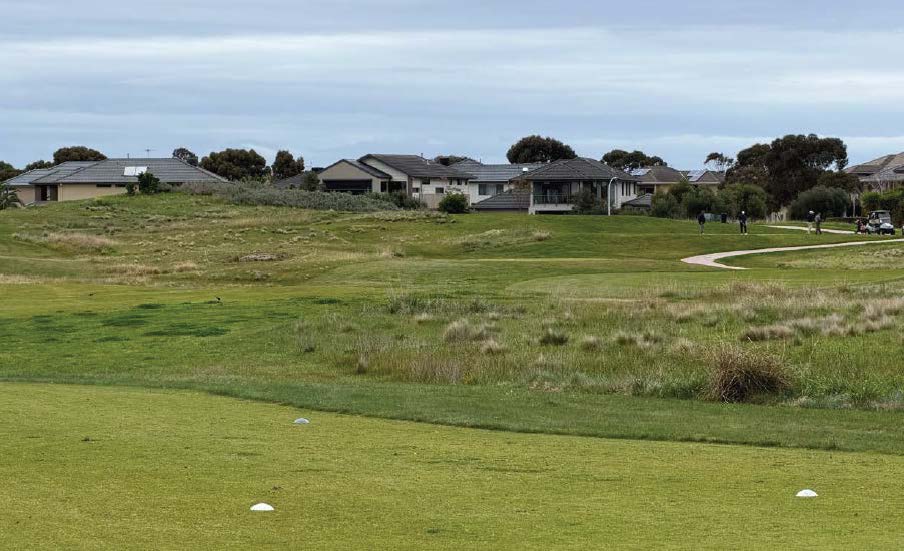
A recent VCAT decision provides a positive example of Victoria’s planning system facilitating new housing within an established residential community, within a golf course setting, while appropriately addressing neighbourhood character, landscaping, amenity, access and safety considerations.
In Sanctuary Lakes Club Limited v Wyndham CC [2026] VCAT 933, VCAT set aside Wyndham City Council’s decisions and directed that planning permits be issued for three residential subdivisions on excess golf course land, within the Sanctuary Lakes estate at Point Cook. Together, the proposals will deliver 36 new residential lots, comprising 28 lots at Hole 15 and a further eight lots across Holes 4 and 5.
Delivering housing within established communities
Succinctly, the proposed subdivisions will ‘infill’ three parts of the existing golf course. As a result, several homes that presently have a direct outlook to the golf course will instead have an outlook to the proposed new residential lots, with some of the new residential lots instead having a ‘front row’ location to the valued outlook. The concerns expressed by those residents who are proposed to lose their ‘front row’ position with an outlook to the golf course was acknowledged, noting they would have purchased their lots for this reason, but the loss of this outlook was an acceptable deficit weighed against the housing delivery positive in the context of the Wyndham Planning Scheme.
An important aspect of the decision is VCAT’s recognition that opportunities to increase housing supply are not confined to major activity centres or land immediately adjoining railway stations.
The Tribunal found that Sanctuary Lakes is a location where increased housing is supported. The subject land is already within the General Residential Zone, is close to the Sanctuary Lakes Activity Centre, has access to bus services and is identified by Wyndham’s housing strategy for moderate incremental change. The Tribunal characterised the additional 36 lots as a “modest, incremental increase” in housing.
The decision demonstrates the contribution that appropriately designed infill development, on difficult sites, can make to Melbourne’s housing supply. It allows additional homes to be delivered within an existing community and on land already zoned for residential purposes on the golf course.
Delivering a net community benefit
Importantly, VCAT expressly found that the developments would deliver a net community benefit, and support the on-ging viability of the golf course.
In relation to the 28-lot proposal, the Tribunal described the additional housing as a “sizeable housing supply” that would assist Wyndham in meeting its housing targets. In relation to the other two subdivisions VCAT found that, although smaller in scale, the development nevertheless represented a “meaningful contribution that will add much needed new housing supply.”
The proposals also provide broader community benefits through landscaping, common property reserves, canopy planting and improved pedestrian connections. At the largest subdivision, Hole 15, moving pedestrian connections from the operating golf course into common property will provide improved access for the surrounding community.
A positive planning and housing outcome
The decision highlights an important principle in accommodating Melbourne’s housing needs. Planning for increased housing supply necessarily involves change to established areas, and development of existing golf course residential estates is particularly challenging. The relevant question is whether that change produces an acceptable planning outcome when assessed against the applicable planning controls and the broader objectives of planning policy.
At Sanctuary Lakes, VCAT concluded that the proposals achieved that balance. Thirty-six new residential lots will be delivered on appropriately zoned land, while landscaping, separation, pedestrian connections and design controls will maintain acceptable neighbourhood character and amenity outcomes.
At a time when increasing housing supply is a key priority for Victoria, the decision provides a useful example of how well-designed infill development can unlock additional housing within established communities while delivering a net community benefit.
How Best Hooper can assist
Best Hooper acted for Sanctuary Lakes Club Limited in the VCAT proceedings. The matter was managed by Dominic Scally, Partner and solicitor advocate, together with Jun Yu, Senior Associate.
Dominic and Jun are available to advise landowners, developers and project teams on infill residential development, including planning strategy, permit applications, Council negotiations, objections, VCAT proceedings and the legal and planning issues associated with unlocking residential development opportunities.

